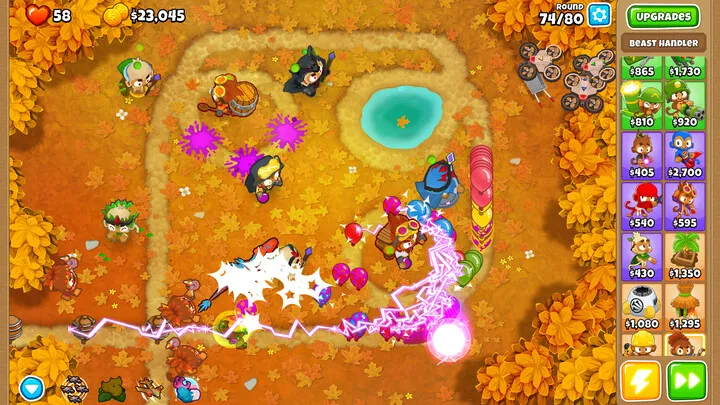






In Bloons TD 6, most players initially focus on towers, upgrades, and economy. However, the true backbone of the game’s design lies on the other side of the battlefield: the bloons themselves, particularly the evolution of MOAB-class bloons. These entities are not just stronger enemies—they represent a carefully structured system of escalating pressure that defines the pacing, strategy, and long-term tension of the game.
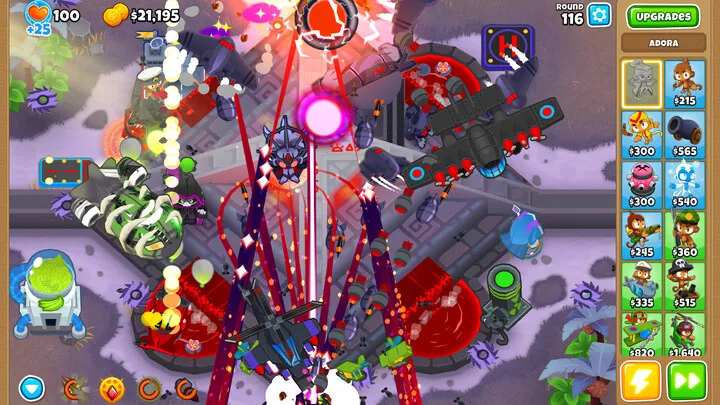
This article explores a specific topic in depth: how MOAB-class bloons function as a layered progression system, shaping the player’s decisions from early encounters to ultra-late-game survival. Rather than being simple difficulty spikes, each MOAB tier introduces new mechanical rules, forcing players to rethink defense strategies and adapt to increasing complexity.
The Introduction of MOAB: A Shift in Game Philosophy
From Swarms to Singular Threats
The arrival of the first MOAB at round 40 represents a fundamental shift. Up to this point, the game revolves around handling large groups of weaker bloons. The MOAB changes this dynamic by introducing a high-health, single-target threat.
This forces players to reconsider their defense priorities. Towers that excel at crowd control suddenly become less effective, while those capable of focused damage gain importance.
Redefining Damage Value
Before MOABs, damage is measured in how many bloons a tower can pop simultaneously. After their introduction, damage becomes about efficiency against durability.
This shift introduces:
- The importance of attack speed over splash damage
- The value of consistent DPS (damage per second)
- The need for targeting prioritization
The game subtly teaches players that not all damage is equal.
The BFB Stage: Expanding the Threat Layer
Multiplying the Problem
When BFBs (Brutal Floating Behemoths) appear, the challenge evolves further. Unlike MOABs, BFBs contain multiple MOABs inside, creating a layered threat.
Destroying a BFB does not end the danger—it multiplies it.
Pressure Through Density
BFBs introduce a new form of pressure:
- Sustained damage requirement
- Increased screen congestion
- Chain reactions of spawning bloons
This forces players to balance single-target damage with crowd control, creating a hybrid strategy requirement.
ZOMG: The Introduction of Endurance Battles
Slowing Down the Pace
The ZOMG (Zeppelin of Mighty Gargantuaness) represents a different kind of challenge. It is not just stronger—it is slower, turning encounters into endurance battles.
Players must maintain consistent damage over extended periods rather than relying on burst damage.
Strategic Implications
The ZOMG stage introduces:
- The need for sustained DPS towers
- The importance of long-term positioning
- The risk of delayed bloon release overwhelming defenses
This stage tests not just power, but stability.
DDTs: The Hybrid Threat Design
Combining Multiple Mechanics
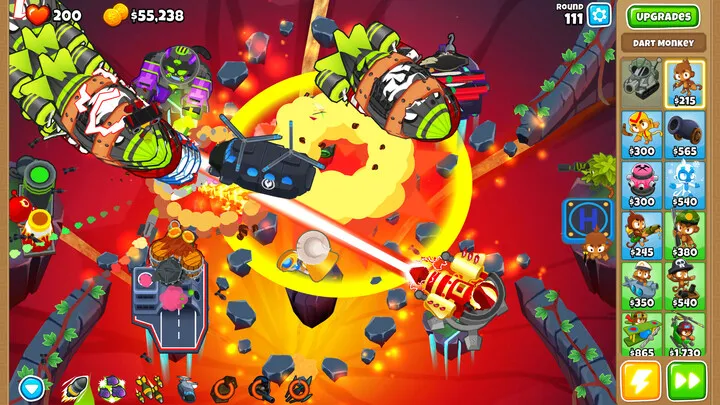
DDTs (Dark Dirigible Titans) are one of the most complex enemy types in the game. They combine multiple properties:
- Camo (invisible without detection)
- Lead (resistant to certain damage types)
- High speed
This combination creates a multi-layered threat that cannot be countered with a single solution.
Forcing Defensive Adaptation
DDTs require players to integrate multiple systems:
- Camo detection
- Lead-popping capabilities
- High burst damage
This forces a reevaluation of entire defense setups rather than simple upgrades.
BAD: The Apex of Structural Pressure
Breaking Established Rules
The BAD (Big Airship of Doom) represents the peak of MOAB-class evolution. Unlike previous bloons, it cannot be slowed or controlled easily, removing many traditional strategies.
This forces players into a pure damage race.
The Collapse Mechanism
When destroyed, the BAD releases multiple high-tier bloons, creating a cascading threat.
This introduces:
- The need for layered defenses
- Preparation for post-destruction chaos
- Strategic timing of abilities
The BAD is not just a boss—it is a system test.
Scaling Difficulty Through Round Design
Gradual Complexity Increase
The progression of MOAB-class bloons is not random. It follows a carefully designed curve:
- Round 40 → MOAB introduction
- Round 60 → BFB pressure
- Round 80 → ZOMG endurance
- Round 90+ → DDT complexity
- Round 100 → BAD climax
This structured escalation ensures players are continuously challenged.
Learning Through Failure
Each stage is designed to expose weaknesses:
- Lack of single-target damage
- Poor camo coverage
- Weak late-game scaling
The game teaches through defeat, encouraging adaptation.
Interaction Between MOABs and Tower Design
Towers Built for Specific Threats
Many towers and upgrades are clearly designed with MOAB-class bloons in mind.
Examples include:
- MOAB Mauler path (Bomb Shooter)
- Anti-MOAB upgrades (Monkey Sub, Dartling Gunner)
- High DPS units (Super Monkey)
Specialization vs Versatility
Players must decide between:
- Specialized towers (high effectiveness against specific threats)
- Versatile towers (balanced but less powerful)
This decision shapes overall strategy.
The Psychological Impact of MOAB-Class Bloons
Visual and Audio Design
MOAB-class bloons are not just mechanically different—they are designed to feel threatening.
Key elements include:
- Larger size
- Distinct sound effects
- Slower, deliberate movement
These features create tension before they even reach defenses.
Anticipation and Anxiety
Players often feel pressure before MOABs appear, especially in later rounds. This anticipation becomes part of the gameplay experience.
The game uses this tension to maintain engagement.
Freeplay Mode and Infinite Scaling
Beyond Designed Limits
In freeplay mode, MOAB-class bloons continue to scale beyond intended difficulty levels. Health increases exponentially, pushing defenses to their limits.
System Breakdown
At extreme rounds:
- Traditional strategies fail
- Only optimized setups survive
- Performance becomes a factor
This stage reveals the limits of both player strategy and game systems.
MOAB-Class Bloons as a Narrative System
A Story Without Words
Although Bloons TD 6 lacks a traditional narrative, the progression of MOAB-class bloons creates a story of escalation.
Each new bloon type represents:
- Increased resistance
- Greater complexity
- Higher stakes
The Language of Pressure
Through design alone, the game communicates:
- Growth of challenge
- Adaptation of strategy
- Evolution of conflict
This makes MOAB-class bloons the central narrative force of the game.
Conclusion
The MOAB-class bloons in Bloons TD 6 are far more than powerful enemies—they are the structural backbone of the game’s design. Through a carefully constructed progression, they transform the gameplay experience from simple defense into a complex system of adaptation, pressure, and strategic evolution.
From the introduction of the first MOAB to the overwhelming presence of BADs and beyond, each stage forces players to rethink their approach, refine their strategies, and confront new challenges. This continuous escalation keeps the game engaging and ensures that no single strategy remains dominant for long.
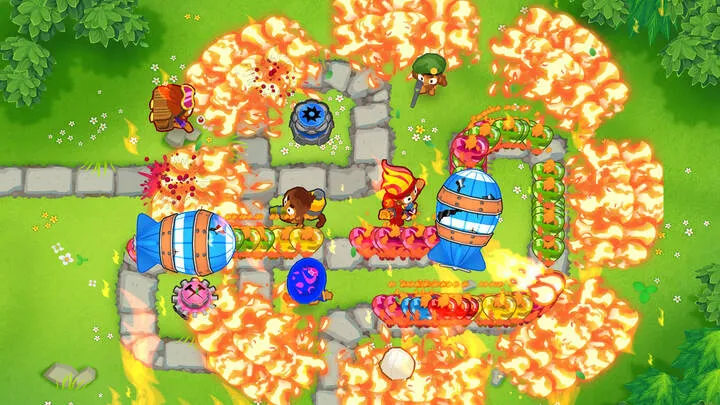
By understanding MOAB-class bloons as a system rather than isolated threats, players can gain deeper insight into the design philosophy of Bloons TD 6—and appreciate the intricate balance that makes it one of the most compelling tower defense games available.